
Want to Stay Interesting? Burst Your Filter Bubble
Hey Rhetors,
The other day, I regurgitated an opinion I saw on my social feed to a good friend of mine. They promptly replied, “Well of course you think that,” and then abruptly changed the conversation to something more interesting to both of us.
Ouch.
At first, I was mildly offended. “That’s all they got out of that? I find habit formation extremely interesting! That video made me think, so did I relay the information wrong?” I had all the same thoughts one has when a lawn chair breaks on them: betrayal, embarrassment, anger, and pain after it’s all over.
So like any cringe moment, I thought about it later, then again after that, and three showers later, I concluded that my friend wasn’t in the wrong for what they said, nor was I for wanting to share. Instead, their reaction and my source told me everything I needed to know: I wasn’t interesting.
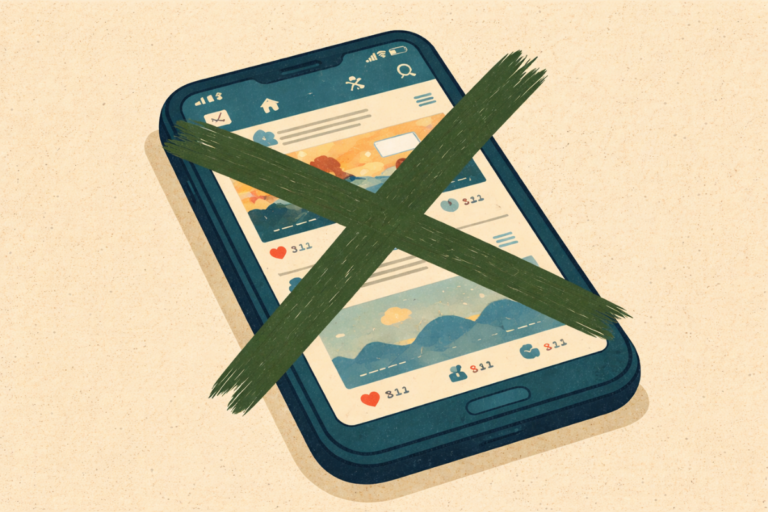
With all of us relaying information from a platform that caters to individual interests, I want to call out a new reason to break out of your bubble: to become more interesting to others.
A Quick Note on the Filter Bubble
If you haven’t heard the term filter bubble before, you’ve felt it. Internet activist Eli Pariser coined it in 2011 to describe how algorithms personalize content to keep users engaged, gradually surrounding them with information that matches their interests and beliefs.
Pariser’s TED Talk kicked off years of debate. Some argue filter bubbles hurt public discourse, while others say there’s little proof they meaningfully change beliefs. Media scholars have been arguing about influence though long before social media, from early theories like the Magic Bullet to today’s more skeptical views.
Still, one thing is clear. Even if your beliefs are not being shaped, your inputs are being narrowed. Your feed shows you what you already like. Over time, that makes your information world smaller, even if it feels more full.
Why Your Bubble Catches Your Attention, but Not Others’
Us marketers often reference Seth Godin’s idea of the Purple Cow. It’s a simple concept: when you pass field after field of brown cows, they blur together. But then a random purple one stands out, all because it’s unexpected.
Your feed is built to show you purple cows, but only for you. It learns what holds your attention and gives you more of it. That is why the content feels sharp, relevant, and worth sharing. To the people who know you, though, it rarely is. They already know your general views and interests. Many of them may even see similar content (especially if they’re your age). So when you repeat something your feed gave you, it sounds familiar, even predictable. That’s what happened to me!
If everything you bring into a discussion traces back to the same stream of content, you’re not adding much after a while. You are repeating what the room already expects you to say! So, my idea: burst the bubble to bring something new to the conversation. Here are some ways to do so:
Tips for Bursting Your Bubble
1. Surprise Yourself
Seek out topics with no clear payoff. History you skipped, cultures you know nothing about, hobbies you will never pick up. I recently fell down a rabbit hole on the Sherpa people of Mount Everest. It had nothing to do with my work or interests, which is exactly why it stuck. I might use that information soon with someone when they’re least expecting it. I bet they’ll remember it!
2. Talk to More People Not Your Age
Most of our conversations happen with people in the same stage of life. That means the same worries, goals, and references keep circulating. Talk with someone much older or younger and pay attention to what occupies their thinking. Different problems lead to different perspectives, and those perspectives travel well in conversation.
3. Play Devil’s Advocate with Your Feed
The next time you scroll to an opinion piece that you resonate with, do two things. First, go to the comments and find the first opposing view and see if it has merit. Then, look up some wording for the opposing view and scroll through a couple of those videos. This will even your feed out a bit, even throw off its profile for you to allow new, unexpected topics in.
This Week: Come in Out of Left Field
In one conversation this week, steer things somewhere unexpected. Do a little prep. Stay respectful. Let curiosity lead instead of certainty. That’s usually where the interesting stuff shows up.
Happy Holidays! Talk soon,
Tim
Curation Corner
If this is your first TWR post, here’s the skinny. Every week, I put together the following, so you can explore communication related and adjacent works by people much more creative and skilled than me! Take a look at this week’s below:
Quote of the Week: “A man’s character may be learned from the adjectives which he habitually uses in conversation.” – Henry Theodore Tuckerman: https://mereinkling.net/2016/01/19/choose-your-adjectives-carefully/
Video of the Week: “English Speakers Can’t speak English” by Foil Arms and Hog: https://youtu.be/b58J8b_Uo4U?si=D3D4KeL8ZB-Sgint
Podcast of the Week: “You Don’t Have to Be the Hero to Change the World” by The StoryBrand Podcast: https://open.spotify.com/episode/5DrpWpHrE4V30zKCDnnWlP?si=dff0660994c34f71
Book of the Week: And Then There Were None by Agatha Christie. Around the holidays, I find a good mystery novel to be the best to cozy up with. And, this one has never been made into a movie, despite being a classic! https://www.goodreads.com/book/show/16299.And_Then_There_Were_None