
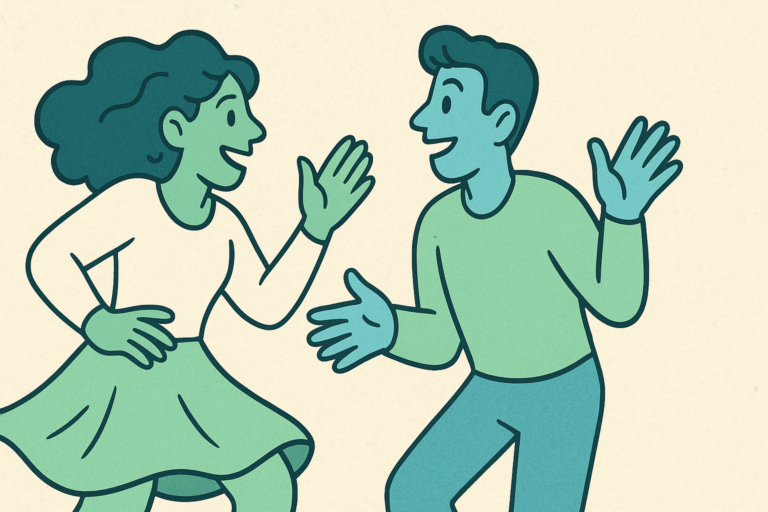
The Dance of Conversation
My girlfriend and I love Dancing with the Stars. There’s something for everyone: the weekly voting ritual, the sometimes shameless promotional theme nights, the 90/10 gamble of excellent or cringey choreography, Alfonso Ribeiro saying “THANKS JULIANNE” at least ten times an episode, and of course, the old white guy making it way too far in the competition. What’s not to love?
But as we watched the other night, I noticed something else. Behind all the sequins and smiles, DwtS is really about the connection between the “pro” and the “star.” The pros on this show have twice the job of anyone else in their field. They have to choreograph routines and understand their star (who often hasn’t danced professionally for a day in their life) well enough to make them shine. If the pro can’t communicate subtly and flawlessly every day, week after week, the whole performance falls apart.
We watch these couples learn to move together and are inspired when the stiff TV personality starts to do well in so short a time, but isn’t that what we’re all trying to do when we talk to each other? Maybe the real secret to better conversations starts on the dance floor.
1, 2, 3 Steps to Pay Attention to, Like a Dance
When you see conversation as a dance, it stops being a competition to “win” someone over with your idea. It becomes a team effort. Social psychologist James W. Pennebaker put it best:
“Conversations are like dances. Two people effortlessly move in step with one another… As with dancing, it is often difficult to tell who is leading and who is following in that the two people are constantly affecting each other.”
So today, I’ve pulled out 3 common terms in dance to apply to conversation. Every time you recognize a conversation as a dance, think about these 3 concepts:
1. Dynamics
Who’s leading right now? Who’s following? In both dance and dialogue, those roles should switch naturally. The transition from speaking to listening in conversation is now knowing when to guide your audience along and when to adapt like a follower.
2. Rhythm
How’s your pacing? Your tone? When you’re out of sync with someone’s rhythm, even good ideas don’t land. If you match the other person’s tempo, or invite them into yours, that’s where real understanding happens. It’s easier to get your idea across when you and your peer are on the same platform.
3. Emotion
When two people share emotional energy (excitement, curiosity, humor) it elevates the whole exchange. I love dancing and talking with my girlfriend because we know how to share the emotion and connect. That spark of connection is what makes both dancing and talking memorable. So if someone feels lethargic or awkward or giddy in conversation, mirror them a little. You might find out why they feel that way on the topic, and take the conversation in that direction.
The Dance to Practice This Week
If a conversation feels off, check your dynamic, rhythm, and emotion. Are you in sync? Are you paying attention to the cues? Or do you need to learn a bit more about where the other person is coming from?
The pros on Dancing with the Stars who win the mirrorball listen, adjust, and make their partners look their best. And if we can bring that same awareness to how we communicate, maybe our daily conversations can have a little more rhythm, a little more flow… and just maybe, a perfect score of 30.